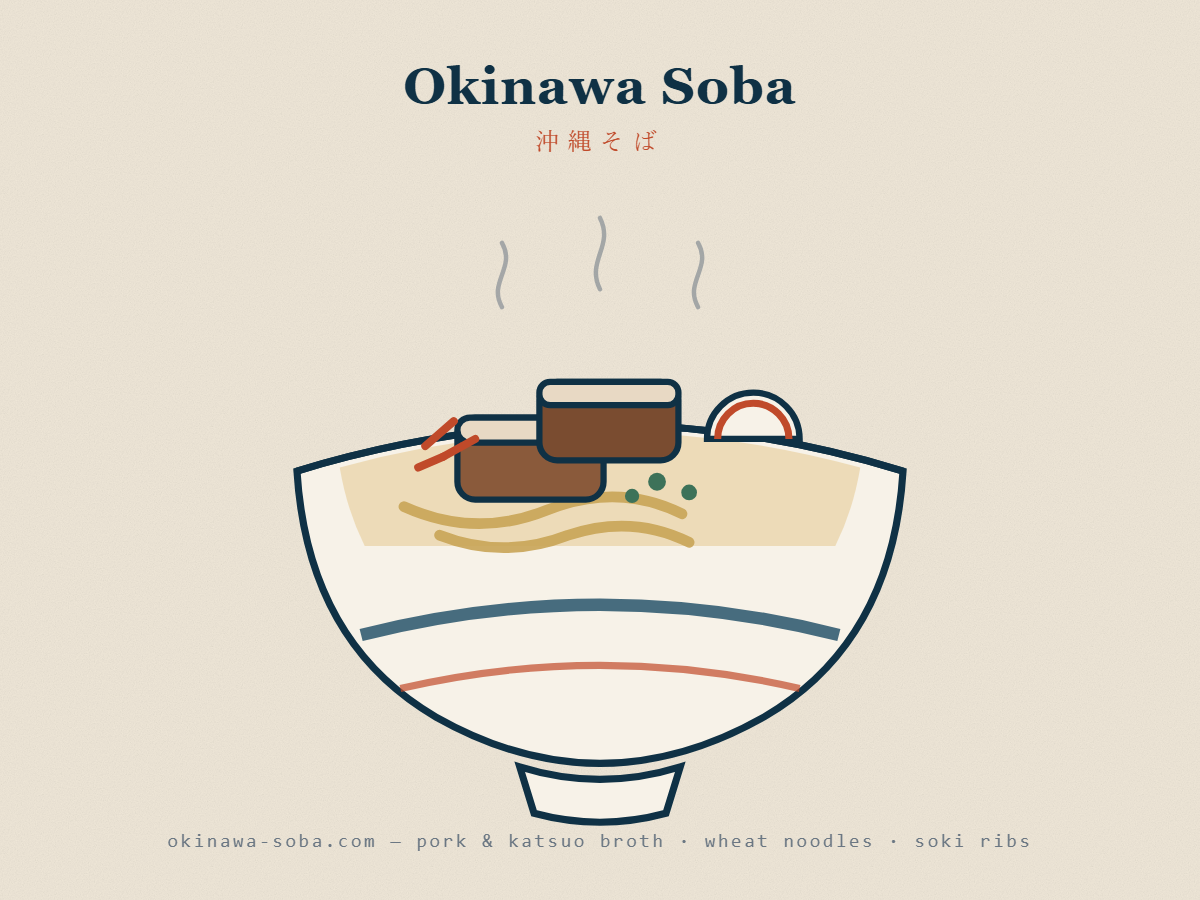
Okinawa soba is home cooking at heart. Island families make it for weekend lunches; shops just make it in bigger pots. That's good news: nothing in the bowl needs professional technique. What it does demand is patience with the broth — the whole dish stands or falls on a clear, gentle だし of pork and katsuobushi.
The three components構成
Broth: pork simmered clear, finished with a steep of katsuobushi (smoked bonito flakes). Lighter than tonkotsu — you should see the bottom of the ladle.
Topping: 三枚肉 sanmainiku — pork belly glazed in soy, sugar, and awamori (Okinawa's rice spirit; sake works).
Noodles: thick, wavy, alkaline wheat noodles. This is the hard part abroad — see the substitution notes below.
Ingredients — serves 4
- Pork belly, one block 600 g
- Pork bones or spare ribs, for the broth 500 g
- Katsuobushi (bonito flakes) 30 g
- Water 2.5 L
- Soy sauce, for the glaze 60 ml
- Awamori or sake 60 ml
- Sugar 2 tbsp
- Salt 1 tsp + to taste
- Fresh thick alkaline noodles (see notes) 600 g
- Kamaboko fish cake 4 slices
- Scallions, finely sliced 2
- Beni shoga (red pickled ginger) to serve
- Koregusu or chili condiment optional
Method作り方
- Blanch the pork Cover the belly and bones with cold water, bring to a boil, simmer 5 minutes, drain, and rinse off the scum. Thirty seconds of extra work; the difference between cloudy and clear.
- Simmer the broth Fresh pot, 2.5 L water, pork and bones back in. Hold at a lazy simmer — small bubbles, never a rolling boil — for about 90 minutes, skimming now and then.
- Finish with katsuobushi Lift out the belly and set aside. Kill the heat, add the katsuobushi, steep 5 minutes, strain. Season with salt and a small splash of soy. Aim for “clean and quietly deep,” not salty — the toppings carry the punch.
- Glaze the belly Slice the belly thick. Simmer with soy, awamori, sugar, and a ladle of broth 20–30 minutes until glossy and fork-tender. (For soki soba, do the same with blanched spare ribs, 60–90 minutes.)
- Assemble Boil noodles per the package, drain hard, bowl them. Hot broth over, then pork, kamaboko, scallions. Beni shoga and koregusu on the table, not in the pot. (Wondering about other toppings — soki, tebichi and friends? We have a field guide.)
The noodle question, honestly麺
Real Okinawa soba noodles are 100% wheat with alkaline water — the oldest method drew lye from wood ash. Outside Japan, your options in order of preference:
- Dried or vacuum-packed “Okinawa soba” noodles from a Japanese grocery or online. Sun Foods and other Okinawan makers export them.
- Thick fresh ramen noodles — same alkaline family. Choose the thickest, straightest ones you can find.
- Thick udon as a last resort. The chew is different (no alkalinity), but the soul survives.
No koregusu? Make a stand-inこーれーぐす
Koregusu is island chilies steeped in awamori. Approximate it by steeping a few small hot chilies in 100 ml of awamori, shochu, or even vodka for a week. A few drops per bowl — it sharpens the broth without turning the dish spicy.